Fire as process
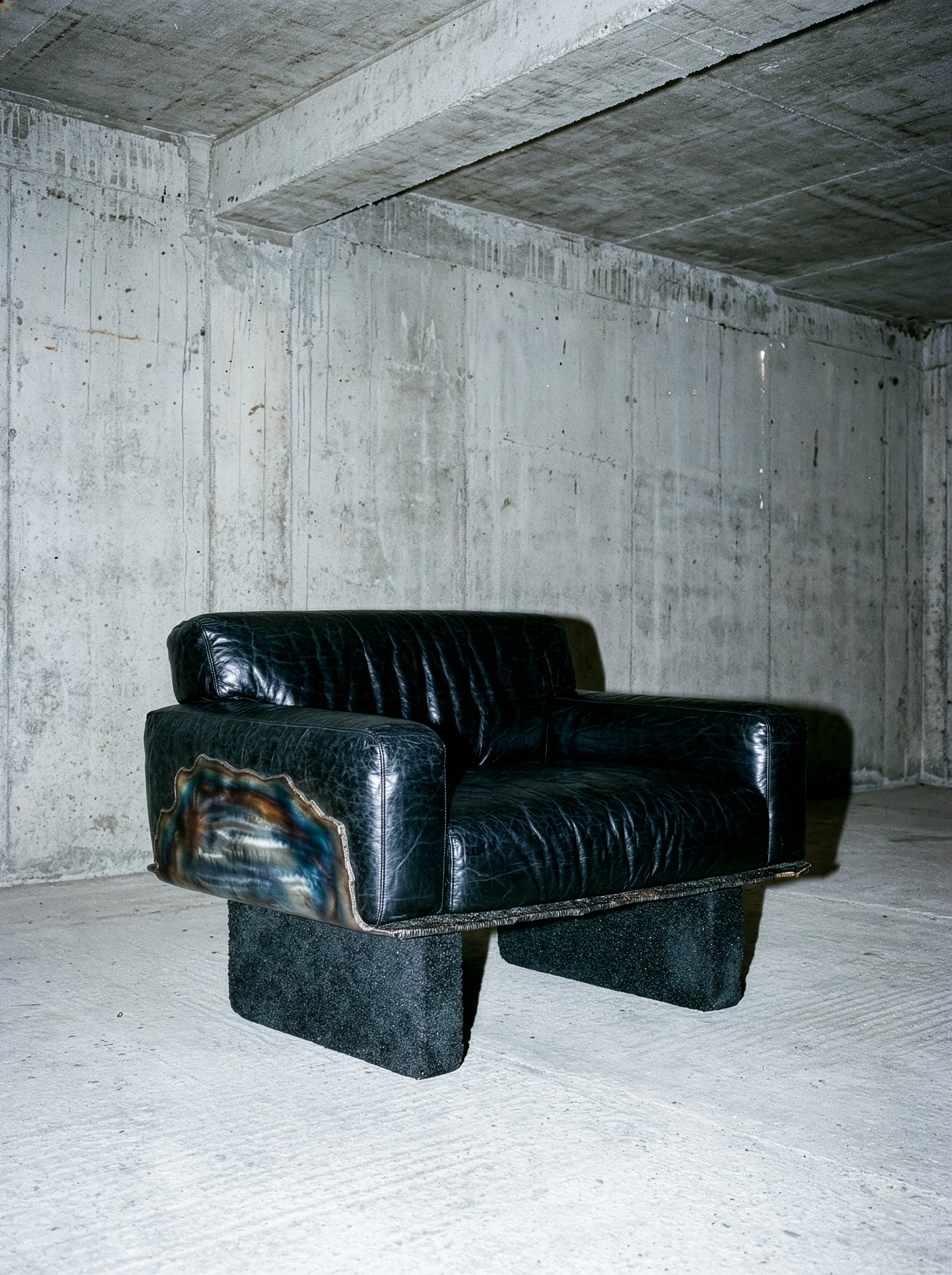
Derived from Latin, USTIO refers to the act of burning. A physical, irreversible action that transforms matter and leaves visible traces behind. The collection embraces fire not as a mere tool, but as an active agent of transformation. Metal is no longer treated as a neutral industrial surface; it becomes a reactive, almost living material, capable of recording the violence of the gesture and the memory of heat.
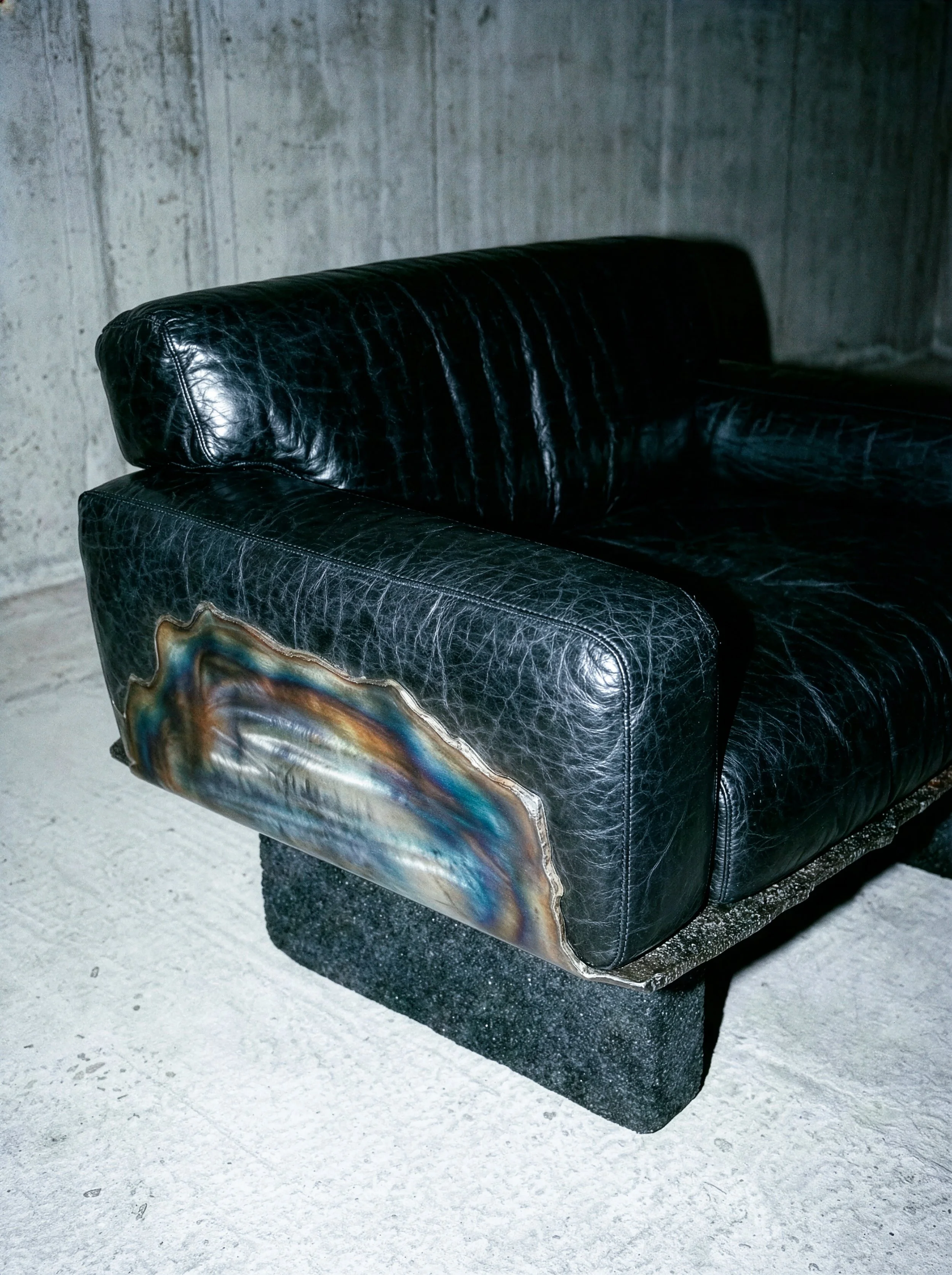
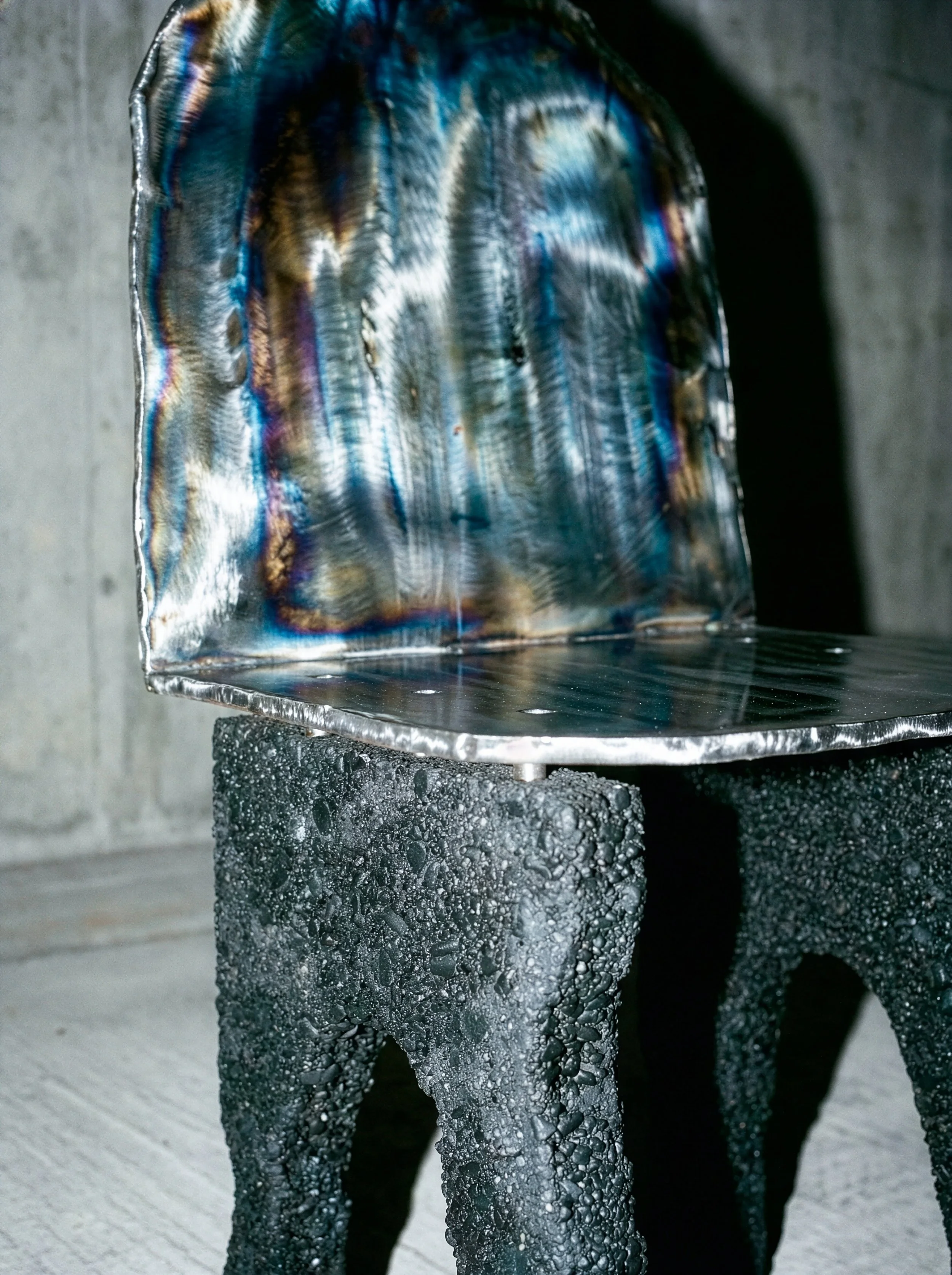
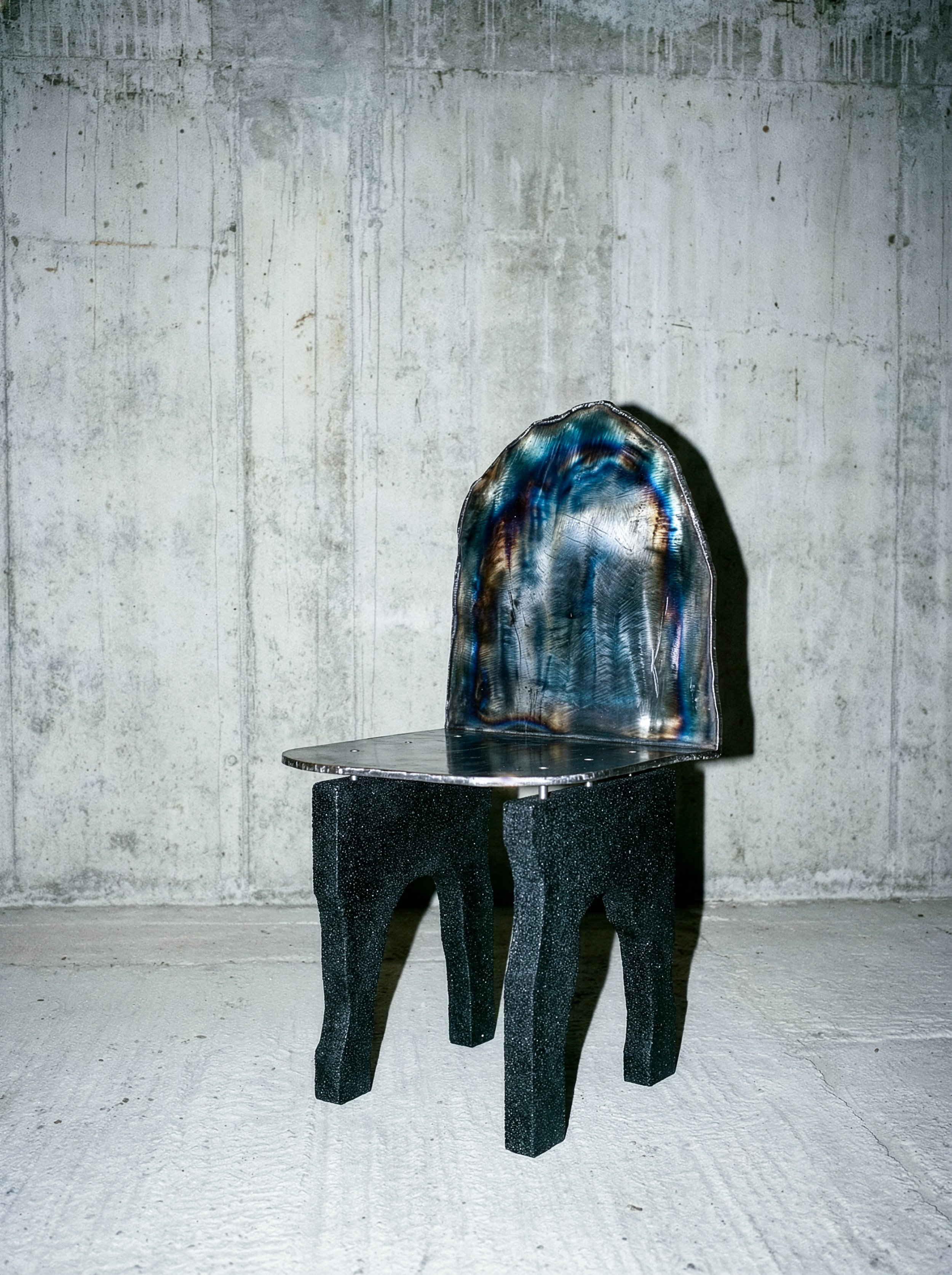
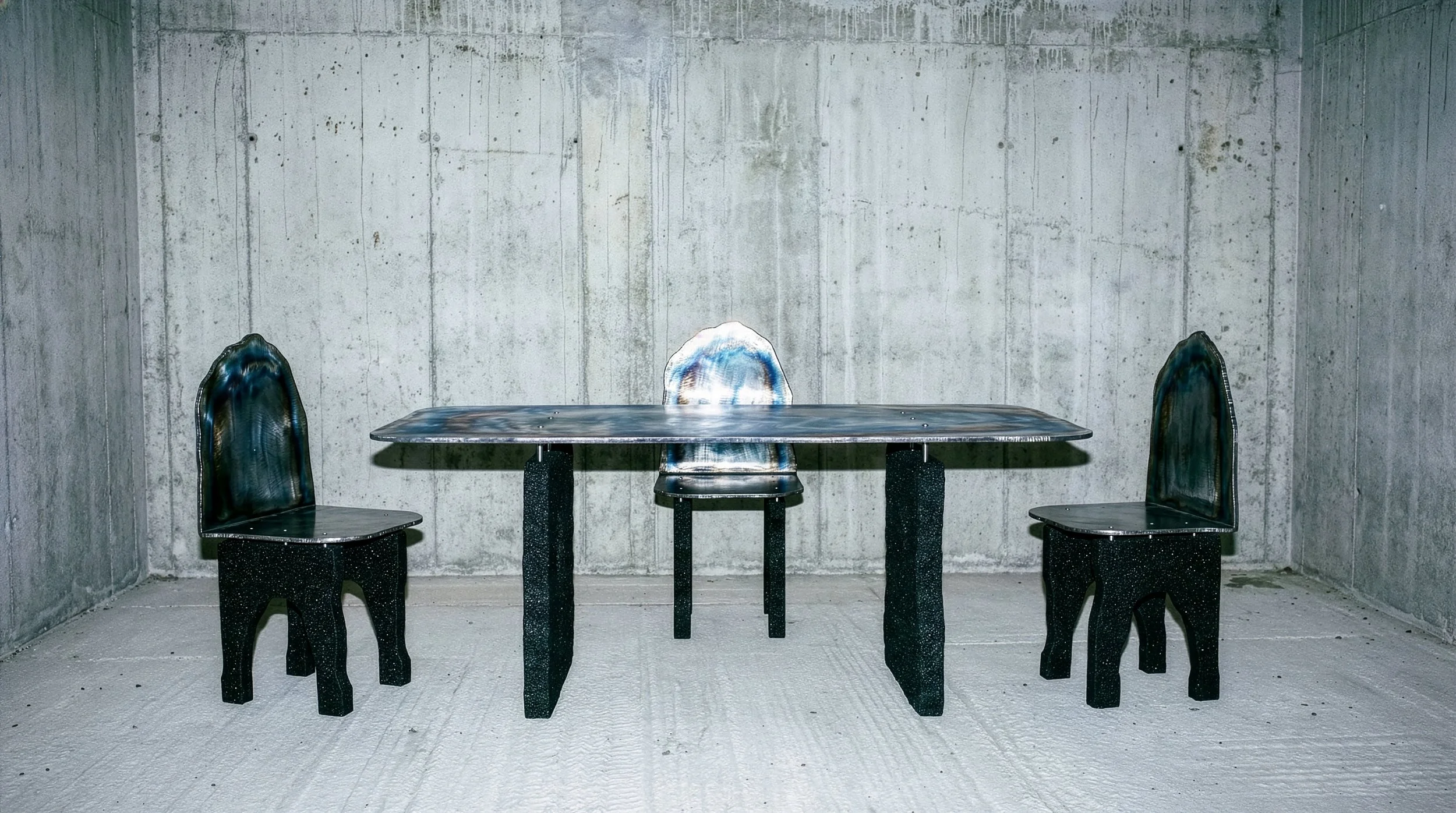
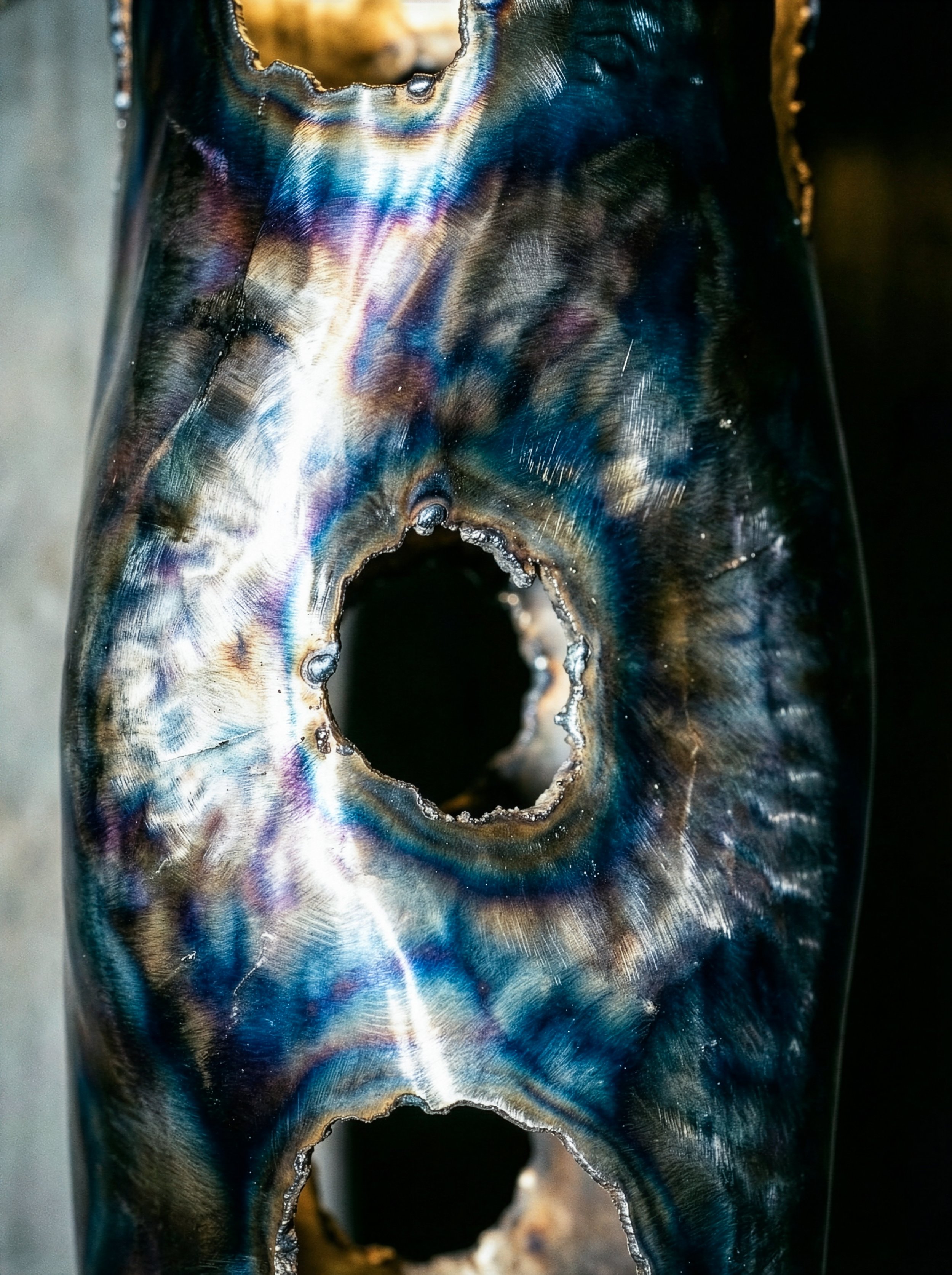
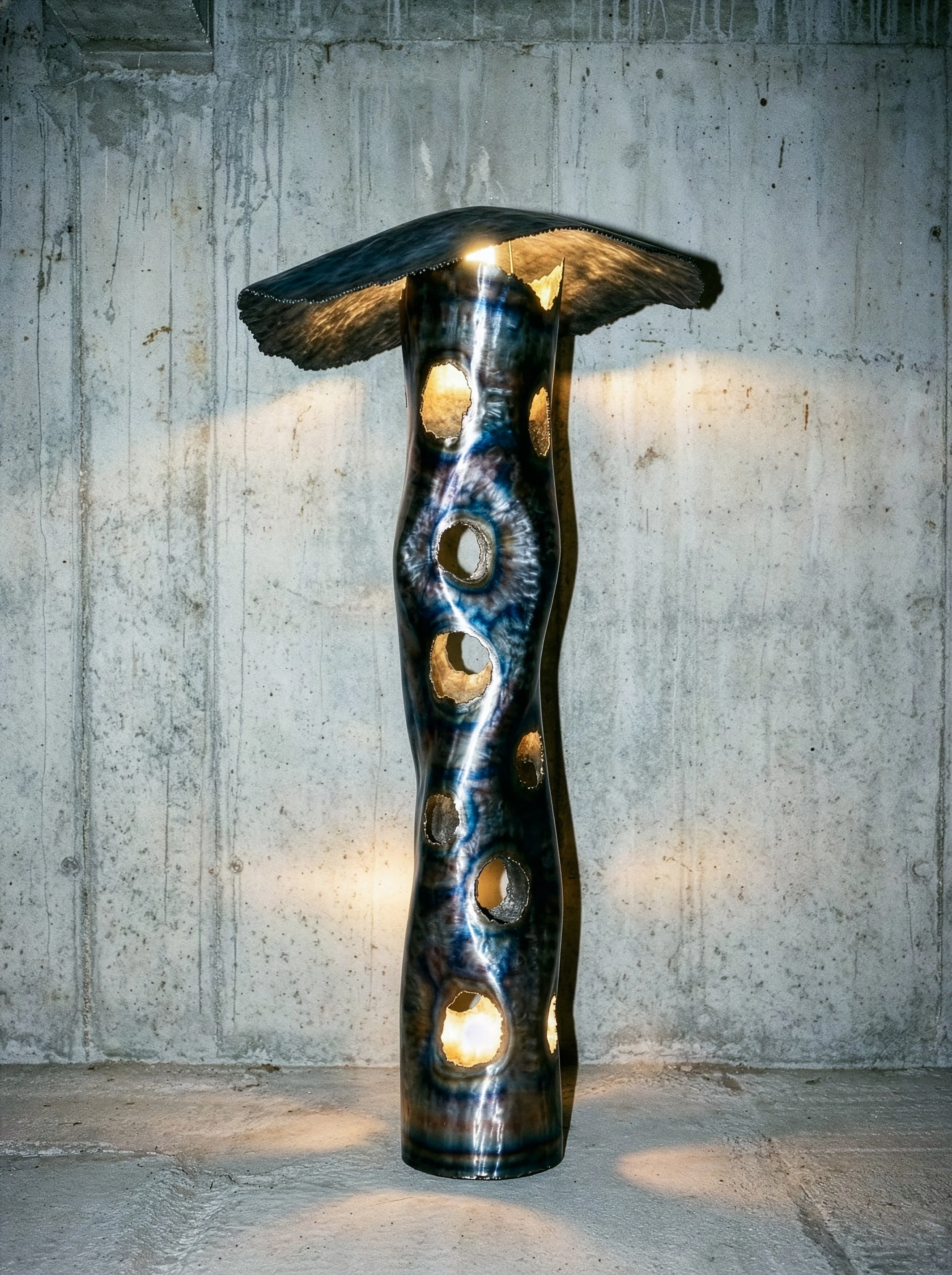
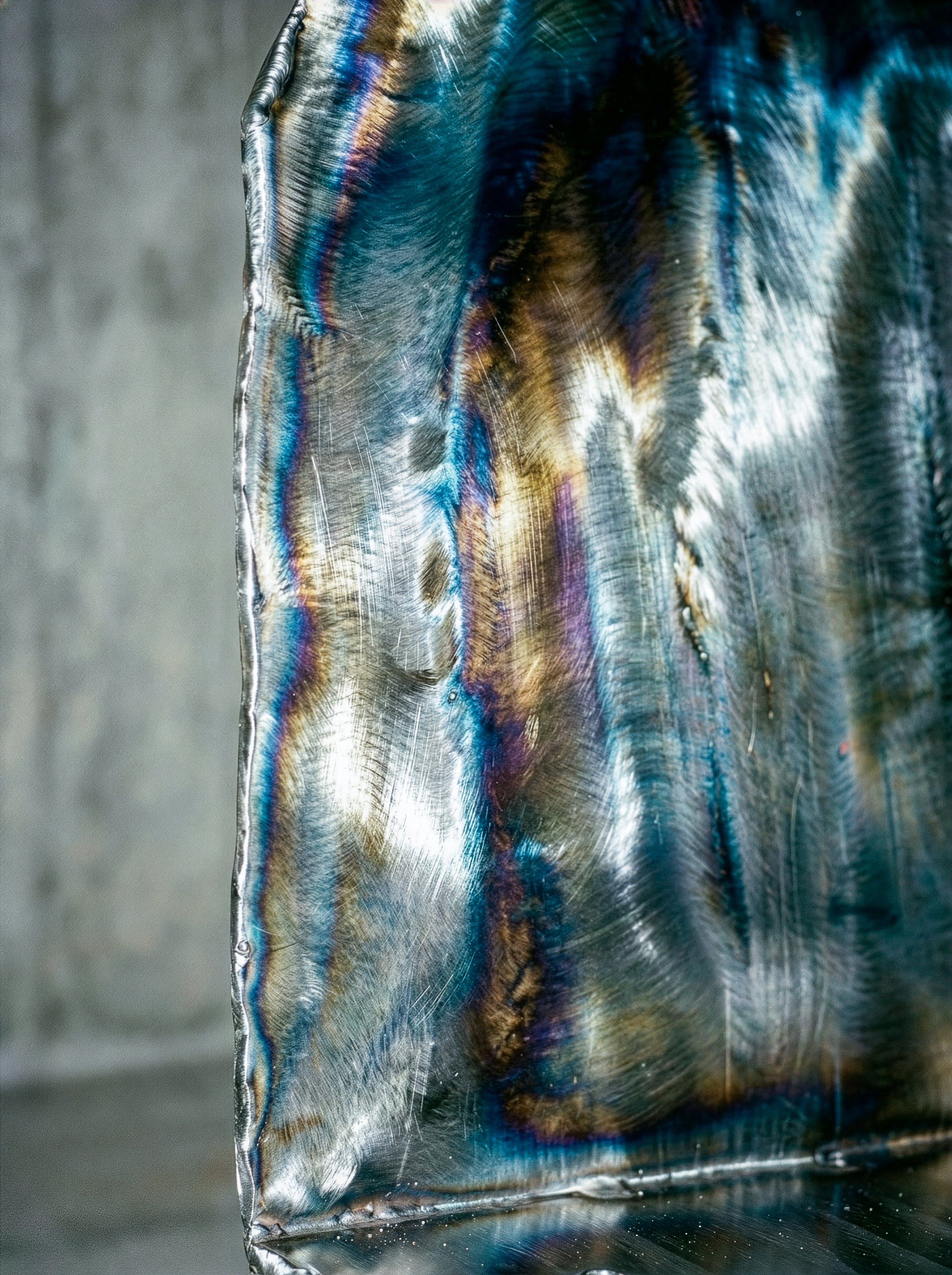
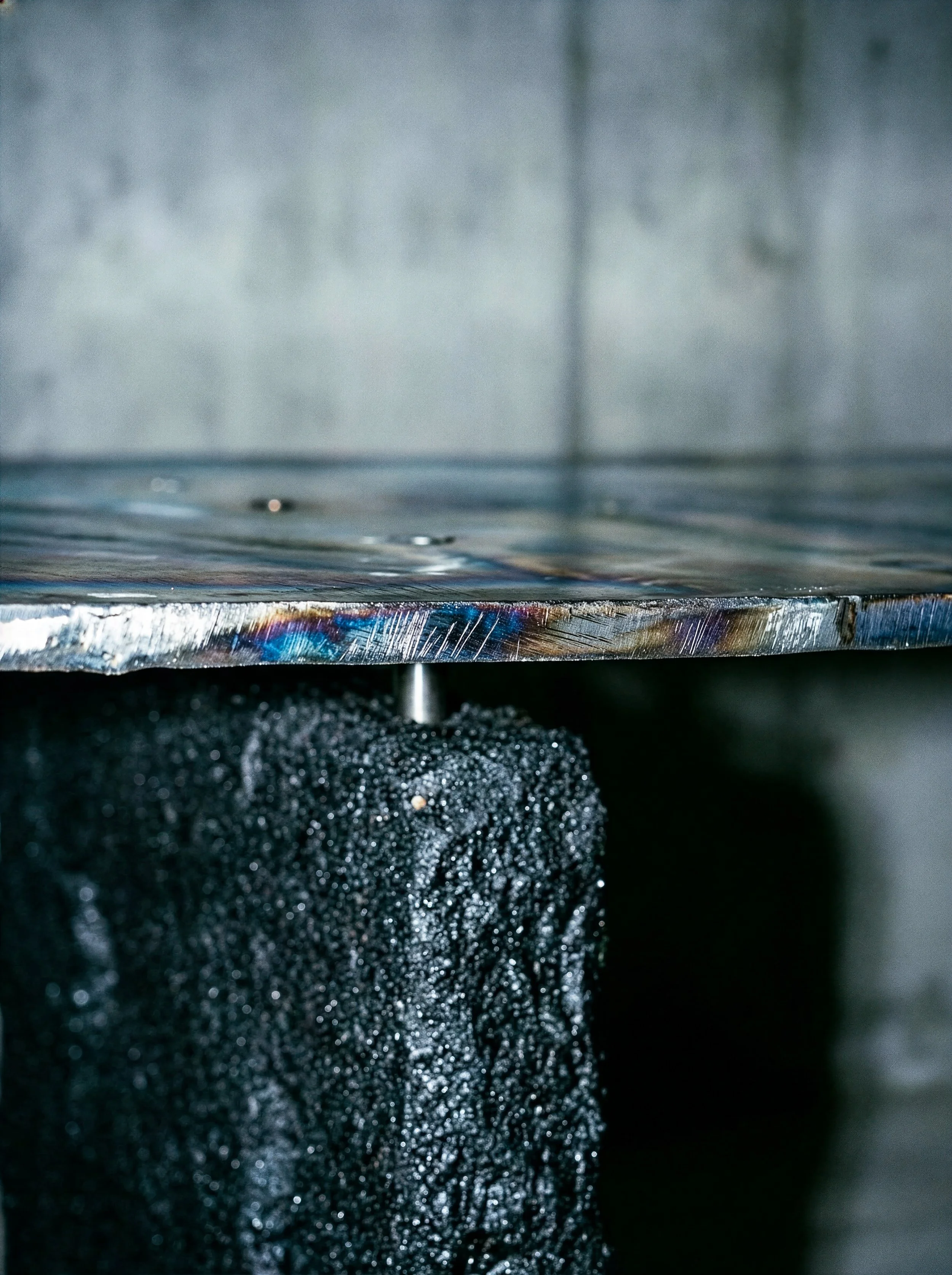
Plasma-cut steel retains the brutality of its edges. The borders remain open and irregular. No correction. No erasure. Through controlled heating, the metal reacts, turns blue, becomes unstable. Chromatic variations emerge under the effects of thermal stress and oxidation. They arise from the process itself.
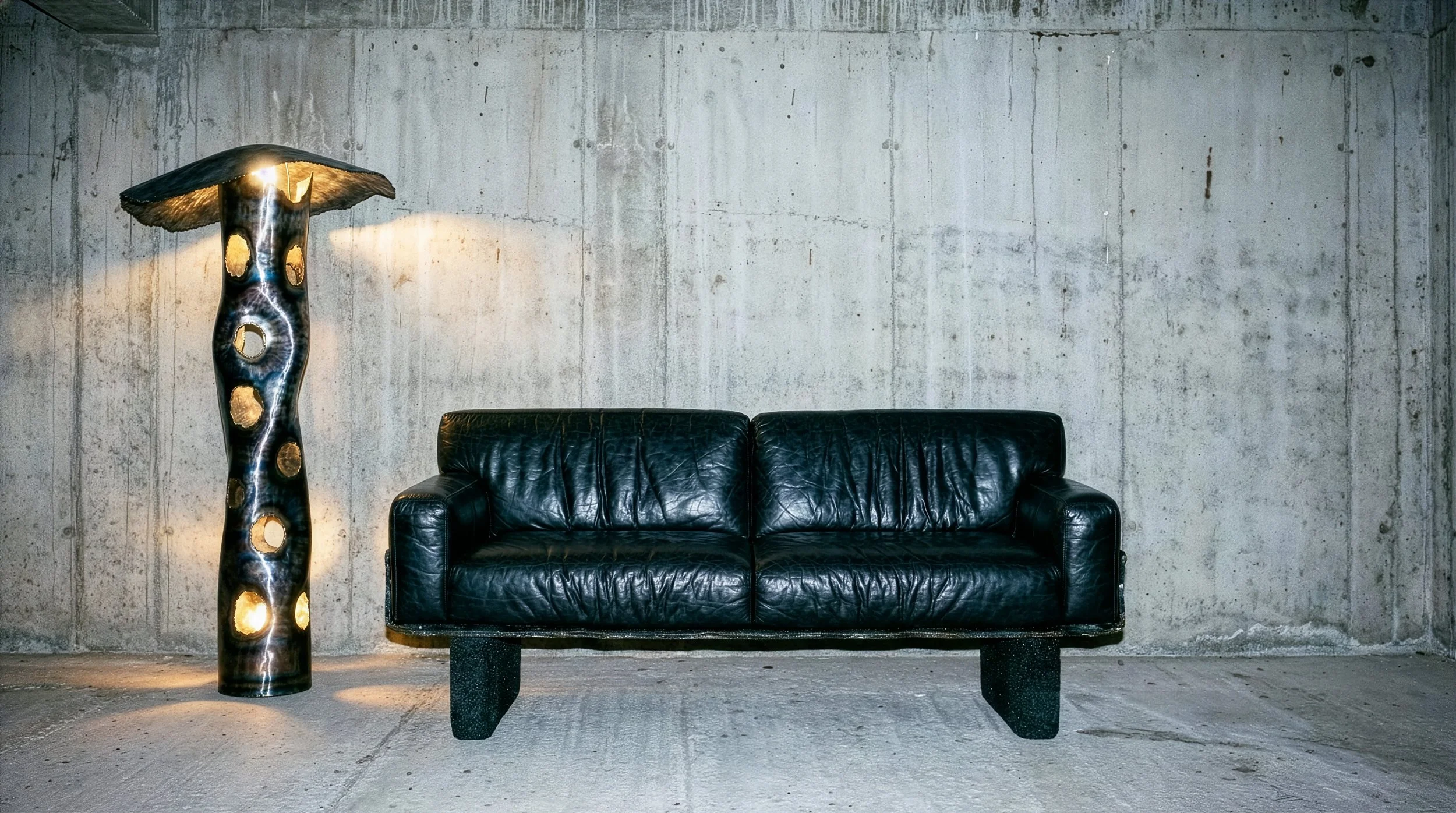
In contrast, the bases are formed from a mineral composite developed from sand, ashes, and reclaimed construction rubble. A dense, rough, organic material that evokes both geological strata and architectural remains. It appears to emerge from the ground, compressed and marked by time, like a fragment extracted from a ruined landscape.
Metal elements are deliberately kept at a distance from mineral components. Structures are suspended using slender rods that create a gap. This void prevents direct contact. It introduces a permanent tension. Imbalance, waiting, and suspension become constitutive elements of the object. The void is not an absence, but an active space charged with force.
The USTIO collection claims imperfection, residue, and irreversible traces as evidence of process. Each piece bears the marks of what has been endured rather than controlled. Fire acts as a revealer. Matter retains the memory of transformation. Nothing is decorative, everything is consequence.